
Learning Level Design Through Architectural Principles
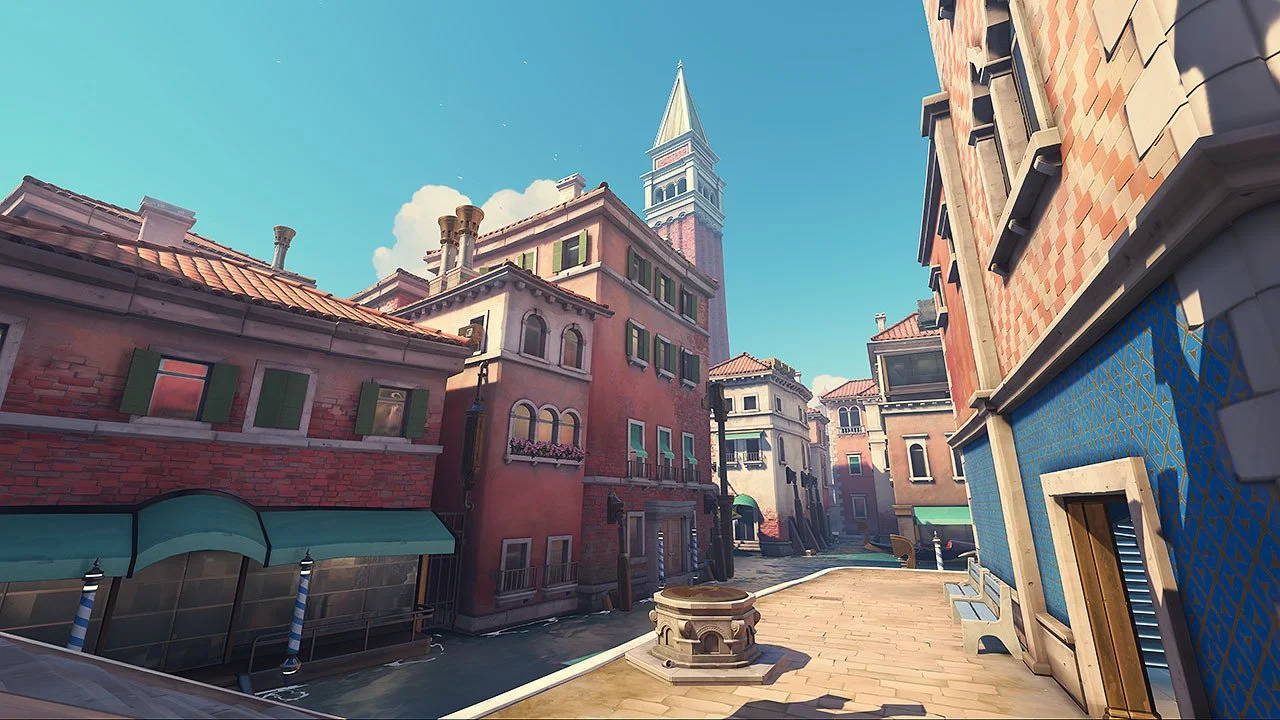
Source: Screenshot of Overwatch, Image Credit Philip Klevestev
Reflecting on This Week in Game Development
I’m still working on The Last Humble-Bee.
I’ve been learning about level design, and read An Architectural Approach to Level Design by Christopher W. Totten!
Here’s some of my notes to take into consideration when designing levels:
Think of the room as a self-contained space. What’s the story in this space?
Think of “Nintendo Power” moments in your levels. Remember those old maps in Nintendo Power magazines and how they would point out the interesting/difficult/risky points of each map? For example, in a “Mario level “the magazine might print out a map and show readers, “hey, there’s a hammer-bro at this spot! look out!” Think of which aspects of your levels would be “Nintendo Power” moments. You shouldn’t have too many or too few in any level!
When asking “questions” in your level design, make the intended answers more natural than the wrong ones.
Levels are built to adjust player behavior.
Should the player feel relaxed, tense, or meditative in this space?
Think of narrow vs prospect vs intimate spaces
Leave space between focus points (and have some clear focus points!)
Add some risk
Make sure each space is readable
Uncertainty is mostly bad, unless you want the player to feel uncomfortable. Don’t make a “T-junction” at a cross-roads and make the player guess which way has interesting stuff. Hint at what’s ahead with some subtle imagery (eg, this path has a dumpster fire over there while the other path has beautiful paved roads… I think I’ll go check out that dumpster fire).
Refuge (under cover) vs prospect (on top/out in the open) space
Vary path widths so that wider paths lead to important stuff and narrow paths lead to exploring the space.
Pacing - The player should flow like water, but move like a car. The player should naturally move through the level (not getting stuck) while be directed to certain aspects by signage, symbols, pre-determined narrative, etc.
Walls and obstacles can provide cover, disrupt flow, cause funneling, or fanning.
Scenes - At any given time, whatever is on the screen is sort of the “Scene”. There should always be something cool in the scene, and it should be “readable” and intentional.
Next week I’ll be using these principles to sketch levels and prototype them in my game! Cheers.
Links:
Level Design